Container Size Chart for Balcony Vegetables
Use this practical container-volume chart to match common balcony vegetables to approximate pot size, root depth, support, and watering needs.
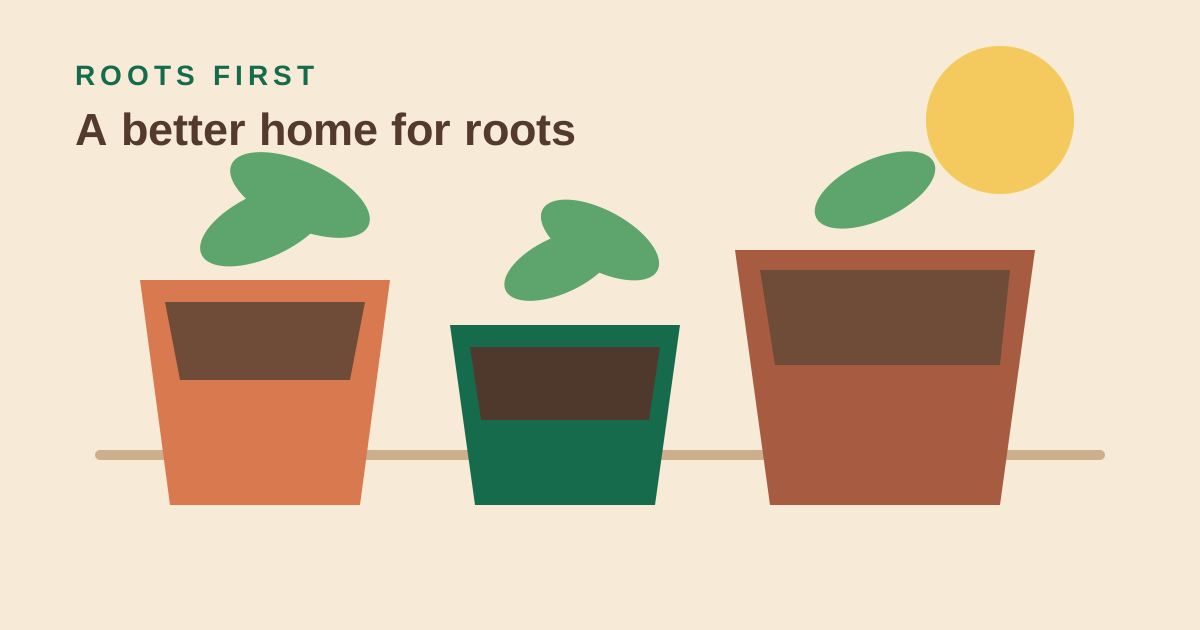
Choose a container for the mature root system, not the small seedling you bring home. As a general starting point, small herbs may use a 1–2 US gallon pot, while tomatoes and eggplant commonly need 5 gallons or more. These are approximate ranges: variety, climate, container shape, and care can change what works.
The starting chart
| Crop | Approximate starting volume | Notes |
|---|---|---|
| Green onions and small herbs | 1–2 US gal (4–8 L) | Width can matter more than depth for small roots |
| Leafy greens | 1–3 US gal (4–11 L) | Troughs help with repeated sowing |
| Radish and short-root carrots | 2–3 US gal (8–11 L) | Choose depth for the named variety |
| Bush beans | 3–5 US gal (11–19 L) | Allow airflow around foliage |
| Chili or compact sweet pepper | 3–5 US gal (11–19 L) | One plant per pot is a straightforward start |
| Eggplant | 5 US gal or more (19 L+) | Upright plants may need anchoring |
| Tomato | 5 US gal or more (19 L+) | Larger volume helps buffer moisture changes |
| Cucumber | 5–7 US gal or more (19–26 L+) | Choose a compact variety and stable trellis |
| Larger squash | Often larger still | Usually a poor fit for a very small balcony |
One US gallon equals about 3.785 litres. The volume ranges are guides, not guarantees or structural load ratings.
Depth can be as important as volume
Root vegetables need sufficient depth for the chosen variety to develop without hitting the bottom too early. Leafy crops can often use shallower containers if the mix stays evenly moist and has drainage. A narrow, deep pot and a broad, shallow trough can have the same volume but behave differently: the wider container exposes more surface area to evaporation, while the deeper pot may retain moisture lower down.
Follow the seed packet or nursery label for root depth and mature plant size. Do not plant several full-size plants into a pot simply because the number of litres seems adequate. Crowding reduces airflow, increases competition, and can make pest inspection more difficult.
How to assess a pot before filling it
Check the drainage holes, stability, material, and where the pot will sit. A container should drain freely but should not leak into a sensitive building area or over a neighbour’s balcony. If it stands in a saucer, empty the saucer rather than letting roots remain in stagnant water.
Remember the finished weight. The pot, wet medium, plant, trellis, and any water reservoir all count. If a balcony already has heavy furniture or planters, ask the building manager or a qualified structural professional before concentrating more weight in one spot. A container-size chart cannot tell you how much load your building can safely support.
Adjust for hot and windy locations
In a hot, exposed location, a larger pot often buffers changes in moisture better than a tiny one. That is not a reason to choose the biggest pot available: too much unrooted media can stay wet and poorly aerated. Choose a sensible match to the mature plant, use a quality potting mix, and learn how quickly it dries in your own conditions.
Fabric bags can dry differently from rigid pots, and dark containers in direct sun may heat more. Compare materials in the guide to grow bags vs pots in extreme heat. If the container dries before the next morning check, consider more root volume, shade, mulch, or a more consistent watering method.
Calculate the approximate volume before you buy
A product’s labelled litre capacity is the easiest starting point. For a simple rectangular planter, a rough internal volume estimate is:
Length (cm) × width (cm) × filled depth (cm) ÷ 1,000 = litres.
For example, an internal space measuring 40 × 20 × 20 cm has a geometric volume of about 16 litres before allowing for tapering, the fill line, and any space taken by structure. For a roughly cylindrical pot, estimate volume as 3.14 × radius × radius × filled depth, then divide cubic centimetres by 1,000. These are approximations; many pots taper sharply and their listed external measurements overstate the usable root space.
Do not fill all containers to the brim. Leave room for watering and mulch, and follow crop-specific depth requirements. A long trough’s total volume does not mean every plant can use all of it independently; plant spacing and root competition remain important.
Three checks after the plant goes in
- Water access: Can you reach the mix to feel moisture below the surface without moving another pot?
- Root room: Does the plant still have enough space as it matures, including roots at the side and bottom?
- Finished weight: What will the pot weigh with wet media, water, plant, tray, and support? Ask building management or a qualified structural professional if balcony capacity is uncertain.
For an original comparison, record the container’s inside dimensions, labelled capacity, growing mix, and the date planted. Recheck after the plant becomes established. If it dries very fast, note the weather and exposure before deciding that you simply need a bigger pot.
Mistakes to avoid
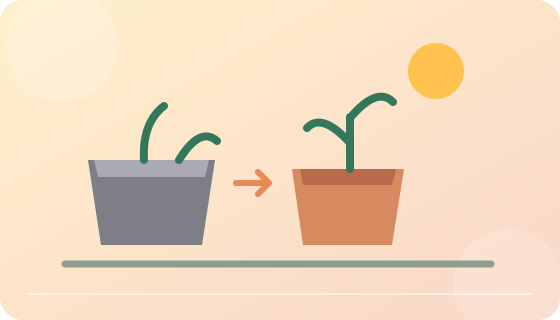
- Using the nursery pot as the permanent container for a long-season crop.
- Assuming all 5-gallon containers have identical shape, drainage, or root-zone conditions.
- Ignoring mature height, trellis weight, and wind exposure.
- Selecting a huge container before confirming that the balcony can safely support the filled weight.
Further reading
- Oregon State University Extension: container gardening — approximate crop and pot recommendations.
- Oregon State University Extension: container gardening basics — drainage and potting media.
Frequently asked questions
Are these container volumes minimums?
They are approximate starting ranges. Check the named variety and local growing advice, then adjust for shape, heat, and watering capacity.
Can I plant two tomatoes in a 5-gallon pot?
One tomato per container is an easier starting rule because each plant competes for water, nutrients, and root space.
Should every pot have drainage holes?
For most balcony vegetables, yes. A reliable way for excess water to escape is essential; a closed decorative cover pot should not leave the growing pot standing in water.
Read more explainers in Containers & Soil, or learn how this site approaches research and corrections.
More in Containers & Soil